• Home
  • Start Here
  • Podcast
  • Thinking Bigly
  • Investing
  • Arts
    • Contact/Donate
    • Sign Up
    • Search
    • Privacy
    • Disclaimer
    • Arts
    • Investing
    • Newsletter
    • Theatre
    • Poetics
    • India (1997)
    • Indonesia (1998)
    • Popular
    • Blogs
    • Food
    • Photography
    • Personal
    • Mingle
    • Writer Bio
    • Investor Bio
    • Me
    • Yellow Gentlemen
    • Investment Aphorisms
    • Places in Between
    • Grants
    • Angel Investing
    • Shop
    • Unconference
Menu

Then Do Better

Street Address
City, State, Zip
Phone Number

Your Custom Text Here

Then Do Better

  • Home
  • Start Here
  • Podcast
  • Thinking Bigly
  • Investing
  • Arts
  • Support
    • Contact/Donate
    • Sign Up
    • Search
    • Privacy
    • Disclaimer
  • Archive
    • Arts
    • Investing
    • Newsletter
    • Theatre
    • Poetics
    • India (1997)
    • Indonesia (1998)
  • Blogs
    • Popular
    • Blogs
    • Food
    • Photography
    • Personal
  • About
    • Mingle
    • Writer Bio
    • Investor Bio
    • Me
    • Yellow Gentlemen
    • Investment Aphorisms
    • Places in Between
    • Grants
    • Angel Investing
    • Shop
    • Unconference

Impact Investing in the UK

June 16, 2018 Ben Yeoh
Source:  https://www.gov.uk/government/publications/growing-a-culture-of-social-impact-investing-in-the-uk

Source:  https://www.gov.uk/government/publications/growing-a-culture-of-social-impact-investing-in-the-uk

Impact Investment Opportunity in UK, this week I was  listening to Elizabeth Corley and expert speakers on the opportunities and challenges for impact at a social impact investing conference.

Some questions raised:

What are the dangers and advantages of speaking about ESG and Impact in the same breath? How important is a common language? Taxonomy? Standardised outcomes?

Fear of unintended consequences of regulation? “Backed by regulators” not equal to “regulated” ? Is it beyond the wit of the industry to find a better way to represent individuals wishes re: Impact ?

Will SDGs used as part of "SDG washing" - something that looks good for marketing but doesn't make real impact. 

There is debate in impact world on if you can make market returns and still have measured deep impact. This notion of a continuum or spectrum of thinking about these ideas is one which is taking shape.

However, when thinking about this in mainstream instiutional or retail investment, I think it has a long way to go before it's embedded in thinking. I base this observation on the minimal mainstream press or adviser coverage and the small knowledge base / marketing at retail or adviser level.  Still, the movement is growing and ideas which start here will hopefully go on to seed bigger things in the mainstream too.


The current Arts blog, cross-over, the current Investing blog.  Cross fertilise, some thoughts on autism.  Discover what the last arts/business mingle was all about (sign up for invites to the next event in the list below).

My Op-Ed in the Financial Times  (My Financial Times opinion article) about asking long-term questions surrounding sustainability and ESG.

Some popular posts:   the commencement address;  by Nassim Taleb (Black Swan author, risk management philosopher),  Neil Gaiman on making wonderful, fabulous, brilliant mistakes;  JK Rowling on the benefits of failure.  Charlie Munger on always inverting;  Sheryl Sandberg on grief, resilience and gratitude.

How to live a life, well lived. Thoughts from a dying man. On play and playing games.

A provoking read on how to raise a feminist child.

In Investing, ESG Tags Impact, ESG

The best time to be born is now

June 7, 2018 Ben Yeoh
FullSizeRender.jpg

 “Everything is not fine. We should still be very concerned. As long as there are plane crashes, preventable child deaths, endangered species, climate change deniers, male chauvinists, crazy dictators, toxic waste, journalists in prison, and girls not getting an education because of their gender, as long as any such terrible things exist, we cannot relax. But it is just as ridiculous, and just as stressful, to look away from the progress that has been made.”


These 32 charts suggest the world is better over the last 50 years and that the best time in the world to be born is now.


FullSizeRender.jpg

Source: Hans Rosling’s book Factfulness

​

​

FullSizeRender.jpg

And more 

FullSizeRender.jpg

Worth a read if interested in the area: my previous blog (including Rosling's quiz) on Rosling’s book.   

In Economics, Health Tags Rosling
Comment

ESG matters, both for operational and share price performance. Nordea.

June 4, 2018 Ben Yeoh
nordea-1.PNG

Nordea “As ESG performance has grown significantly in importance for companies and asset managers in recent years, it's time to look at the numbers. Is ESG screening a worthwhile tool? In a word, yes. High ESG focus contributes to risk mitigation; our research shows this is mirrored in strong operational and share price performance. We also note that predictive attributes as to future earnings stability and share price volatility suggest that ESG research belongs in company valuation. We argue that companies and investors simply cannot afford not to care.

Note sample size for CCC is small and "special sit" companies often fall in here too eg post a poor ESG controversy.

Note sample size for CCC is small and "special sit" companies often fall in here too eg post a poor ESG controversy.

Key conclusions: We see solid evidence that ESG matters, both for operational and share price performance The relative performance of the top versus bottom ESG performers amounted to as much as 40% in 2012-15 ESG is largely uncorrelated with our quant factors, and incorporating it adds alpha to our value and quality strategies.

ESG as a driver for operational improvement.  We find a consistent correlation between ESG ratings and operational metrics. For example, companies with top ESG ratings have higher ROE and ROCE, and lower net debt/EBITDA than the market. Returns, margins and share prices are also more stable for the top-rated companies and we find that improving ESG performance bolsters stability in returns, implying it is not a lagging indicator.

ESG adds alpha to already proven quant factors We find ESG of great interest as an addition to our quantitative framework. An intuitive auto-correlation between ESG and quality, which share a lot of characteristics, did not materialise, but ESG added alpha to our quality strategy.

Link to research from Nordea  

This chimes with a recent BAML Study using a different ESG database – see blog here.

You can also see it in conjunction with these papers here:   

from MSCI and ESG and higher RoIC companies

from Caroline Flammer on long term incentives and causal evidence for  ESG nad other Academic ESG papers.


The current Arts blog, cross-over, the current Investing blog.  Cross fertilise, some thoughts on autism.  Discover what the last arts/business mingle was all about (sign up for invites to the next event in the list below).

My Op-Ed in the Financial Times  (My Financial Times opinion article) about asking long-term questions surrounding sustainability and ESG.

Some popular posts:   the commencement address;  by Nassim Taleb (Black Swan author, risk management philosopher),  Neil Gaiman on making wonderful, fabulous, brilliant mistakes;  JK Rowling on the benefits of failure.  Charlie Munger on always inverting;  Sheryl Sandberg on grief, resilience and gratitude.

How to live a life, well lived. Thoughts from a dying man. On play and playing games.

A provoking read on how to raise a feminist child.

In ESG, Investing Tags ESG, Research, Nordea

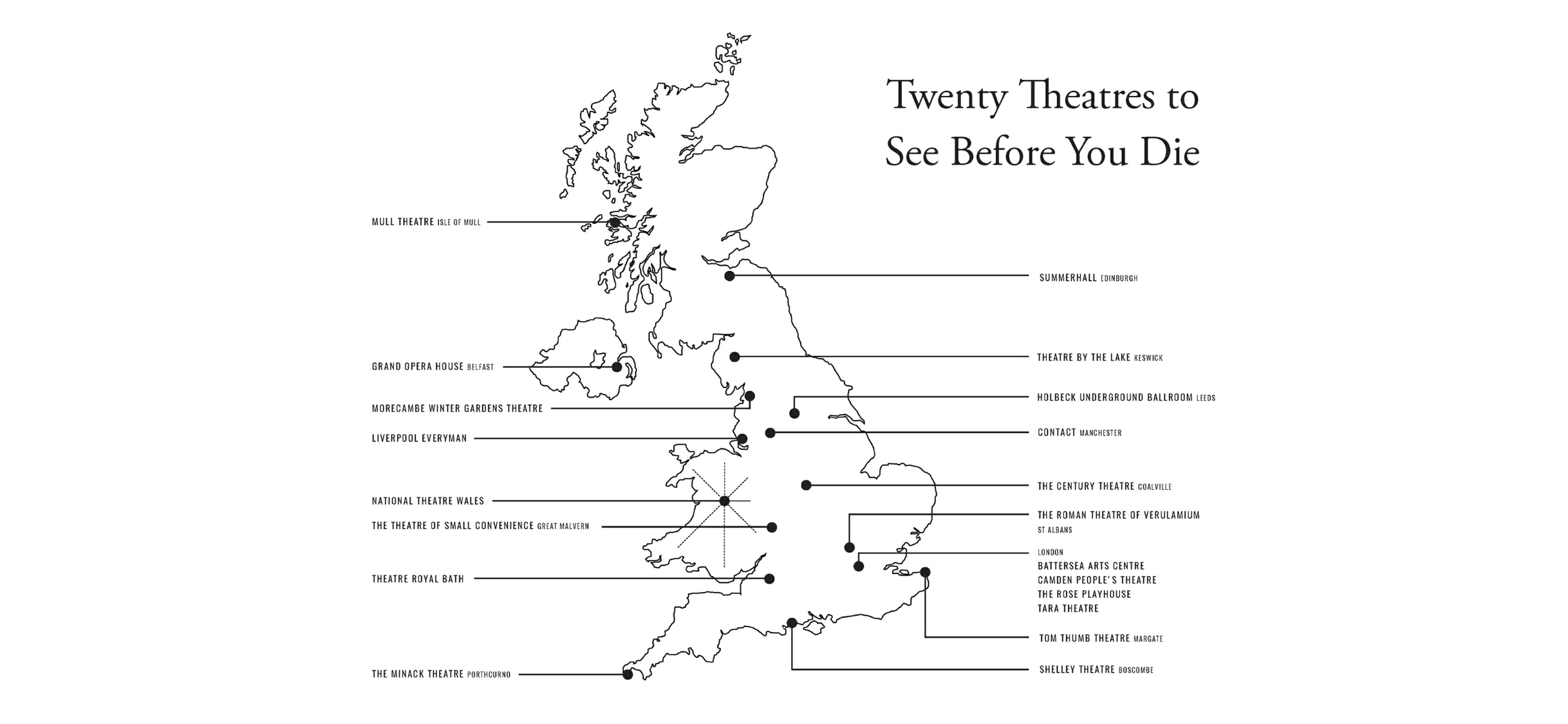
Amber Massie-Blomfield: A love letter to Britain’s Theatres

May 28, 2018 Ben Yeoh
IMG_3426.PNG

A Love Letter... seems to me the better title of Amber Massie-Blomfield's passionate and insightful book on important British theatres  (better than the main  title of: 20 Theatres to see before you die)

If theatre spaces are important to you (or intrigued about how they can be) then this book is for you.

It is written with a practitioners insight, a useful knowingness. Perhaps that same type of knowingness Lorrie Moore brings to her essays when she writes “ In the words of the jazz musician Ben Sidran: “Critics! Can’t even float. They just stand on the shore. Wave at the boat.” Or as Aristotle wrote in Politics, “Those who are to be judges must also be performers.” Conversely, perhaps those who are performers must also be judges—once in a while.”

There is also a positive thread of female knowing.  AM-B on the Minack theatre “The theatre was Rowena’s life’s work. For more than half a century she kept at it, spending harsh Cornish winters hauling timber and ballast up from the beach, working tirelessly, late into the evenings, often alone. It was an epic undertaking and her tools were no more sophisticated than a wheelbarrow, a hammer and chisel.”


(CC) via Wikipedia, Minack Theatre, Cornwall

(CC) via Wikipedia, Minack Theatre, Cornwall

…It was long after she died in 1983 that the Minack Theatre began to thrive as a business. Still, she kept faith with her creation to the last, sustaining it with her own diminishing funds, making minor additions and necessary improvements. Rowena possessed a singularity of vision usually permitted only to men. How often she had been described as eccentric, even mad….

… Taking time to find a chair would be a waste. A wheelbarrow does just fine. That was Rowena Cade. All propulsion, forward trajectory; a restless creature in constant pursuit of her wonderful, confounding dream: a symphony in stone. She built it because it wasn’t there.”


Inside of Tara Theatre

Inside of Tara Theatre

And a thread of being rooted in community... on watching a performance at the Tara Theatre, a theatre with a rare earth floor (led by AD Jatinder Verna) she picks up on a verbatim work of local Earlsfield residents with

“One of the accounts belongs to Joseph, who came to Earlsfield from Guyana. He talks about how he arrived in the city in 1956, discovering, for the first time, the existence of the classes. From 1960 until his retirement in 2001, he worked for British Rail. He set up a record label too, Sun City, promoting artists from the West Indies and later, writing his own songs. He talks about meeting his wife —who had also moved from Guyana to London —how the first time he went to visit her at home, he took her beef instead of roses. “In those days it was difficult to get beef. They used to have horse meat or rabbit,” he explains, and when he does so, there’s a murmur of recognition in the audience. “That’s right, that’s how it was,” someone says, and it’s like that throughout the show, little ripples in the audience, the delight of seeing details you recognise from your own life acknowledged on stage. When Joseph first arrived, he’d go to Elephant and Castle tube station and hang about for hours outside, hoping to see another person of colour. If he did, he’d approach them, and they’d swap contact details, arrange to meet up. “Racial tensions were much higher then,” Verma told me, talking about that feverish summer of 1977. I’d like to believe he’s right —that things are much better now. But across town, while we are sitting in this theatre, there is a disturbance in Dalston. Bins are set alight, Molotov cocktails thrown at police in riot gear. When I get home, I watch a video of it on Twitter. A lorry crashes through a barricade of upturned industrial bins and is surrounded by masked protestors who bash the windows and eventually climb on to the roof, bringing it to a halt. They are protesting the death, a few days ago, of Rashan Charles, a 20-year-old black man who died after being chased and apprehended by police. The Crown Prosecution Service will ultimately determine police officers should not face prosecution for the death. But the anger, I think, is about living in a society where it seems —in the wake of the fire at Grenfell Tower and the shooting of Mark Duggan, Jermaine Baker and Azelle Rodney —that, unconscionably, the lives of people of colour are still valued less. In this context, the existence of this theatre feels radical and important. At the end of the show, the man in front of me —the man who was greeting the audience as they came in —gets up on stage. This, it transpires, is Joseph, and he is here to perform his song, ‘World Anthem One’, in public for the very first time. “I wrote three songs called World Anthem One, Two and Three. You may ask why three World Anthems —well, the world is a big place and circumstances are not the same all over the world, each event needs its own response.” He sits centre-stage, takes the microphone, and breaks into song, unaccompanied. He has a thin, sweet voice that seems to split him open and reach inside him. All around him, the audience is stilled by it, hardly breathing. It is difficult not to think, now, of the gap between these two moments unfolding on opposite sides of the city. Preaching theatre as a solution to the world’s problems might seem absurdly naïve, sentimental even —the tiny transformations I’ve witnessed here too little to matter. And yet I watch this man singing his anthem for the world for the very first time, his voice growing bolder as the song goes on. I look around at the faces of the audience, turned towards him, glowing orange in the light reflected from the floor. And I think: this is all there is, really. Making a clearing for a person in our midst. Allowing them to share what matters to them. Listening.” 

And later in the bar she notes a featured audience member saying:

“it seems that the universe is saying no. But actually, it is telling you that the things you want, you have to fight for.”


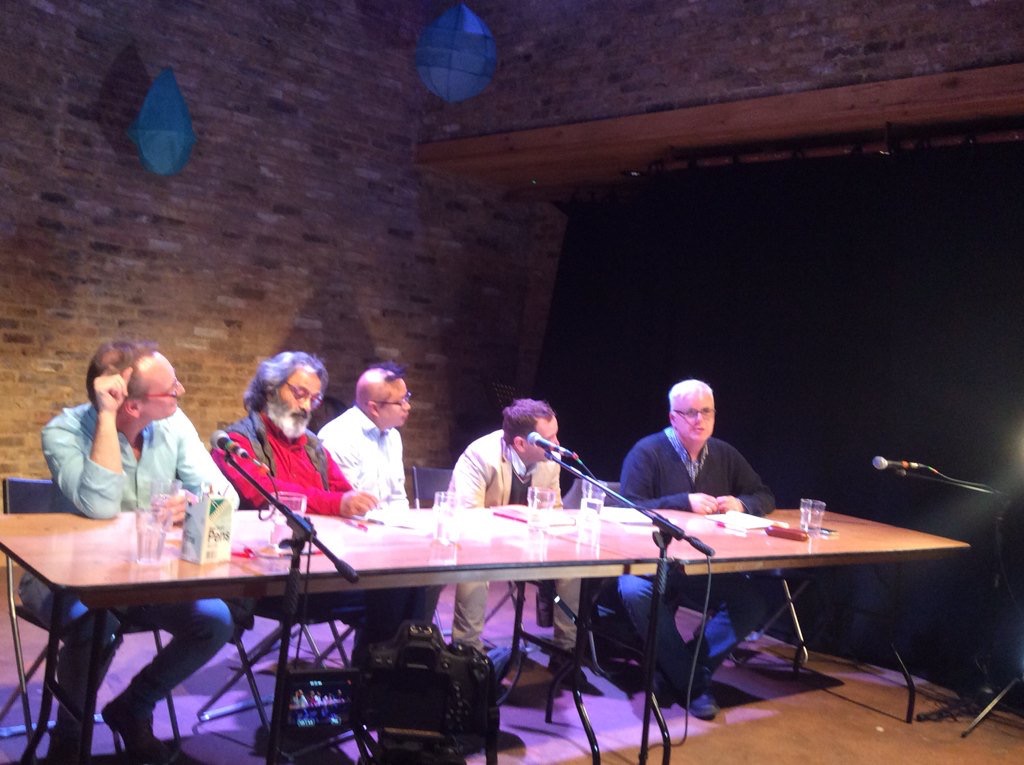
Verma in red, me centre, listening to Jonathan Meth (far right) sitting on the earth floor (visible though not obvious) hosting a panel on East Asian theatre and networks - another valuable use of the space.  Sadly, no petals. Tara Theatre. &nb…

Verma in red, me centre, listening to Jonathan Meth (far right) sitting on the earth floor (visible though not obvious) hosting a panel on East Asian theatre and networks - another valuable use of the space.  Sadly, no petals. Tara Theatre.   

And “At the end of the show, Verma invited the audience to walk on the stage. People shuffled out of their seats and crowded onto to the tightly packed earth. Two women discarded their sandals in the front row, put their soles directly on the ground, as if they might earth themselves. When we were all gathered, Verma said, “I promise you magic on this stage.” Suddenly, a volley of yellow rose petals rained down, and we lifted our faces skywards.”

In talking about Camden People’s theatre (CPT) where she was Exec Director for several years she writes:

A space where you can always hear the outside...

A space where you can always hear the outside...

“Hope… We need this more than ever, now. At its core, what we’re witnessing around the world —as borders close down, migrant communities are maligned, and cultural differences quashed —is a struggle over what it means to be together in the same place. In this context, a theatre is a symbol and an expression of an idea: that being with other people is better than being alone. That coming together to engage with different views and ways of living in the world is not only necessary —it enriches us. It is much harder to ignore the plight or destroy the life chances of a person whose gaze you have held. Sharing space is the beginning of kindness.”

CPT is where I met my to be wife as she came to see a play of mine (Lost in Peru) when CPT had Chris Goode as Artistic Director.


AM-B writes: “ Former artistic director Chris Goode wrote in The Forest and The Field of how, during his tenure, he came to see the noise from the street as a kind of ‘litmus test’ for the attitudes of visiting companies. ‘There were those for whom it was, without question, a black mark against the venue, a failure to show proper respect for their work by protecting and insulating it from the crude and inevitable (but unpredictable) intrusions of the urban environment around us; and there were those who accepted it with patience and equanimity and perhaps a little curiosity as to what would be visited on them in the next performance and how, if at all, they would respond.’ Sometimes it seems there isn’t much space in the city for places like this anymore, by which I mean to say, marginal places, places that are rough around the edges, places that don’t easily fit the narrative of growth and progress.”


Certainly I doubt there were many spaces to take on a piece like Lost In Peru. 


Having been away (and really still with no evening time for theatre currently ) from theatre spaces these last 9 years or so, it is interesting coming back to some of them - perhaps coming back to them still with hope.

“  What makes us hopeful? If we can find our answer in a theatre, we might find we understand our world a little better too. “

I am fairly sure I will never see all of these 20 theatre. In bearing witness to these spaces AM-B, and giving us a glimpse into the quirky, unique and important; she also offers a portrait of a different kind of Britain to one portrayed in the media.

In painting this theatre landscape and rooting it in history, community and the present time, she indirectly provides a defence for theatre - an art form, or discussion form, that some would say is not particularly thriving in diverse audiences and perhaps in decline - and in doing has written an important work for our time. 

Available on Amazon (Amazon kindle link here).  AM-B occasional Tumblr here and you can find her on Twitter.


The current Arts blog, cross-over, the current Investing blog.  Cross fertilise, some thoughts on autism.  Discover what the last arts/business mingle was all about (sign up for invites to the next event in the list below).

My Op-Ed in the Financial Times  (My Financial Times opinion article) about asking long-term questions surrounding sustainability and ESG.

Some popular posts:   the  by Nassim Taleb (Black Swan author, risk management philosopher),  Neil Gaiman on making wonderful, fabulous, brilliant mistakes;  JK Rowling on the benefits of failure.  Charlie Munger on always inverting;  Sheryl Sandberg on grief, resilience and gratitude.

How to live a life, well lived. Thoughts from a dying man. On play and playing games.

A provoking read on how to raise a feminist child.

In Arts Tags Theatre
Comment

Teeth. The forces behind straightening.

May 27, 2018 Ben Yeoh
IMAGE.JPG

I’ve been exploring the forces behind people straightening their teeth. Grooming and beauty have been in human culture for thousands of years and those behavioural forces are very much alive in our culture today as well.

Source: Instagram, teeth_by_teki (Dream Smile Dental, Dr Teki Sowdani)

Source: Instagram, teeth_by_teki (Dream Smile Dental, Dr Teki Sowdani)

One force is Instagram (see teeth_by_teki snap with Rio Ferdinand, above). Here the compulsion to show your smile to your friends and the world at large persuades people to straighten their teeth.

I learned from the rather amazing and passionate orthodontist Mo (Dr  Mohsen Tehranian, Mo does several hundred cases a year, that's a lot of experience) that you can choose to have a smile optimised for Instagram selfies or one optimised for face to face conversations. The angle is different with selfies taken from a high angle.

I also learning about the astonishing technology that allows a details 3D image of your teeth and what they could look like in a matter of minutes.

IMAGE.JPG

If you like what you see and want to go ahead, your Dr might discuss your imaging with technicians in Costa Rica based on technology developed in California.  Once satisfied, your clear aligners (see first picture above) are made in Mexico and shipped by UPS back to London or Hong Kong in a few days.   Wow. 

It’s a level of personalised healthcare that would seem like science fiction.  While the driver behind this is often the straight smile (and hence the consumer often liking the clear aligner system over metal braces) rather than medical problems, I still find it incredible.

While this is not investment advice, medical advice or any other kind of advice if you want to know the pro and cons of teeth straightening techniques, I know a man who knows... (or there's also me with the faux expertise of a few hours knowledge...)

IMAGE.JPG

How to live a life, well lived. Thoughts from a dying man. On play and playing games.

If you'd like to feel inspired by commencement addresses and life lessons try:  Neil Gaiman on making wonderful, fabulous, brilliant mistakes; or Nassim Taleb's commencement address; or JK Rowling on the benefits of failure.  Or Charlie Munger on always inverting;  Sheryl Sandberg on grief, resilience and gratitude.

A provoking read on how to raise a feminist child.

Cross fertilise. Read about the autistic mind here.

In Investing Tags Teeth, Investing

Hans Rosling: Factfulness, in defence of data and a true worldview

May 23, 2018 Ben Yeoh
FullSizeRender.jpg

I scored 9/13 which I thought was appalling (yes, high exam achiever me). However, apparently this is a brilliant score as most people only score 2 or 3 / 13.

The late Hans Rosling, much admired by Bill Gates (2 min youtube by Gates here on Rosling  and Gates' review of the book here) and his collaborators (son and daughter-in-law) continue to educate and advocate for a fact-based world view.


While many challenges remain, the core message is that on most measures of human development the world is in a much better place today than 50 years ago, than 100 years ago. It is still the best time in the world to be born. Furthermore, a narrative of us vs them is unhelpful - the world is no longer divided in two.

Be skeptical of what you read and go back to the data to find your own answers.

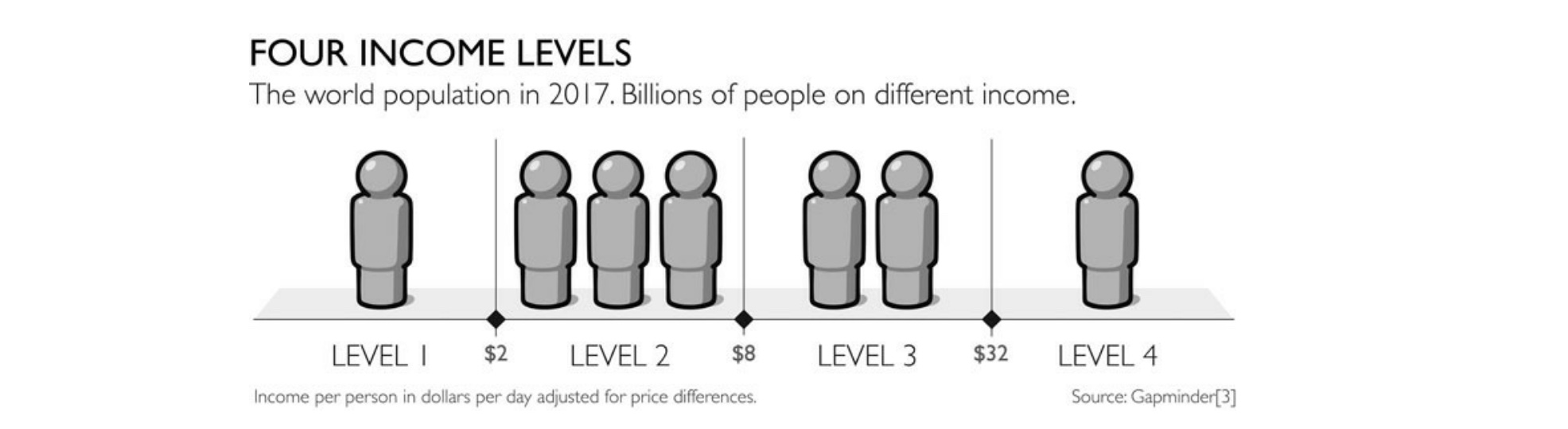
How did you score? (answers below) The way Rosling looks at big world metrics such as in question 8 (where the world lives) is - I think - a useful way of framing the data. Rosling uses it to suggest 4 levels (see below)

FullSizeRender.jpg

The book only recently published (Amazon link here) is a superb fact based cry out to give us better tools to asses the true state of the world.


FullSizeRender.jpg

Answers are below. Don't cheat!


FullSizeRender.jpg

I am also glad I got question 3 and question 9 right (most people don't, see below), but as it is 2 areas of interest for me - phew.


FullSizeRender.jpg
FullSizeRender.jpg
Comment

Elon Musk Productivity Tips

May 21, 2018 Ben Yeoh
IMG_3265.PNG

Elon Musk (Telsa CEO) productivity recommendations:

- Excessive meetings are the blight of big companies and almost always get worse over time. Please get of all large meetings, unless you’re certain they are providing value to the whole audience, in which case keep them very short.

- Also get rid of frequent meetings, unless you are dealing with an extremely urgent matter. Meeting frequency should drop rapidly once the urgent matter is resolved.

- Walk out of a meeting or drop off a call as soon as it is obvious you aren’t adding value. It is not rude to leave, it is rude to make someone stay and waste their time.

- Don’t use acronyms or nonsense words for objects, software or processes at Tesla. In general, anything that requires an explanation inhibits communication. We don’t want people to have to memorize a glossary just to function at Tesla.

- Communication should travel via the shortest path necessary to get the job done, not through the “chain of command”. Any manager who attempts to enforce chain of command communication will soon find themselves working elsewhere.

- A major source of issues is poor communication between depts. The way to solve this is allow free flow of information between all levels. If, in order to get something done between depts, an individual contributor has to talk to their manager, who talks to a director, who talks to a VP, who talks to another VP, who talks to a director, who talks to a manager, who talks to someone doing the actual work, then super dumb things will happen. It must be ok for people to talk directly and just make the right thing happen.

- In general, always pick common sense as your guide. If following a “company rule” is obviously ridiculous in a particular situation, such that it would make for a great Dilbert cartoon, then the rule should change.

Source Jalopnik.  See also Musk in more detail on communication here. 


"If I had more time, I would have written a shorter letter."  which is attributed to many different writers. 

This difficulty in free expression is one of the reasons why psychological safety as researched by Amy Edmondson and Google Research is so important.

Few people like being told they are not doing their job well. Nevertheless, we should judge if constructive criticism is coming from a place of malicious intent, or positive intent. If positive, then it needs to be taken in the spirit it is given and we can all improve. I believe much internal commentary is with constructive intent - when that is believed, a team gains psychological safety.

If you'd like to feel inspired by other addresses and life lessons try: Ursula K Le Guin on literature as an operating manual for life;  Neil Gaiman on making wonderful, fabulous, brilliant mistakes; or Nassim Taleb's commencement address; or JK Rowling on the benefits of failure.  Or Charlie Munger on always inverting.

Cross fertilise. Read about the autistic mind here. On investing try a thought on stock valuations.  Or Ray Dalio on populism and risk.

In Investing, Leadership Tags Musk, Tesla

Quant Survey ESG and other Factors

May 20, 2018 Ben Yeoh
BAML 2018,   Savita Subramanian (BofAML, Quant team)

BAML 2018,   Savita Subramanian (BofAML, Quant team)

What to learn from Quant and ESG?  Assets in smart beta have grown at a ~30% annualized rate since 2009, quant jobs outnumber fundamental jobs 5-to-1, and >60% of investors blend quant and fundamental techniques. Quant models have grown increasingly complex, with investors using 17 factors in their models today vs. 7-8 in the 90s.

ESG saw the third-biggest increase in usage of any factor – 26% of clients use it today vs. 19% last year. Social/moral considerations were still the primary driver for use, followed by risk-mitigation.


qunat-esg-baml2.png

Investors with both short- and long-term time horizons are using ESG, vs. a skew toward longer-term investors a year ago.


This from the BAML US Equity & US Quant Strategy.  See previous blog on their ESG work. Also of note:

Momentum is crowding out Growth & Value

Value and Growth factors were tied as most popular (both used by 38% of clients), but both saw a decrease in usage vs. last year, while Momentum strategies saw the biggest increase in usage.

Value still dominates the models for the 12th year running, thought it saw a drop in popularity vs. a year ago (used by 70% vs. 80% of clients). Relative Strength, a Momentum factor, saw the biggest uptick in usage vs. last year.


Still only a minority of quant funds are using ESG as a signal, even though they are using around almost 20 signals on average.

This gives me some comfort as a bottom-up fundamental active manager. However, the data is looking increasingly powerful on the quant side as well. There have been positive findings across other ESG data sets (with Sustainalytics and MSCI being the two other most used data sets; this one is the Thomson Reuters data set), although the correlation between these data sets remains relatively poor at between 0.3 to 0.5 in the studies and work I have seen.

The other factor this work and similar raises is the power of passively managed funds. They now make up over 40% of US-dom equity funds up from 20% in 2009, and I do not see this trend changing any time soon. In fact various forces may if anything accelerate this trend.

Vanguard now owns more than 5% of over 494/500 S&P 500 companies. Vanguard is now the steward of many people's capital.  That man in the street through Vanguard now owns 1/20th of the largest companies in the US.  It will be interesting to see how stewardship evolves in this situation.

More thoughts:    My Financial Times opinion article on the importance of long-term questions to management teams and Environment, Social and Governance capital.

 One of the best Munger speeches on how to think about a mental model of inversion can be found here.

March 2018 thoughts on greed, fear and risk.  

 MSCI paper on high ROIC companies and ESG.

In ESG, Investing Tags ESG, Quant
← Newer Posts Older Posts →
Follow me on LinkedIN
Contact/Support